Working Range Fit
Match max digging depth, reach and dump height to trench profiles, face-loading benches and spoil-pile geometry before locking a weight class.

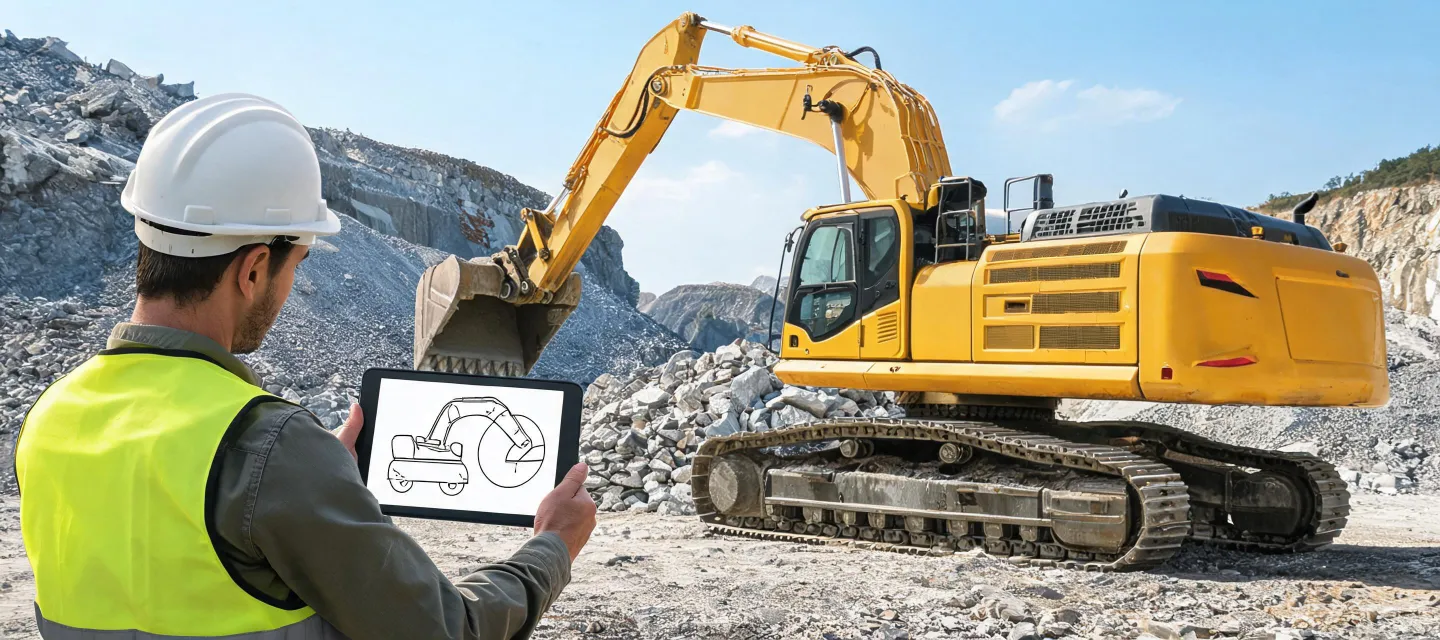
Working-range overlays, hydraulic flow tables, undercarriage options and Tier 4 Final packages — Sumitomo selection guidance for fleet planners who size machines before capital release.
Every published dig envelope, bucket class and hydraulic flow figure is reproducible on Sumitomo structural and fluid test benches before it reaches a contractor bid package.
Match max digging depth, reach and dump height to trench profiles, face-loading benches and spoil-pile geometry before locking a weight class.
Size main-pump flow and auxiliary circuits for general-purpose buckets, rock buckets, breakers or shears without starving swing or travel.
Ship EPA Tier 4 Final / EU Stage V logs, CE 2006/42/EC declarations and ISO 4406 cleanliness records with every machine shortlist.
Progress bars show how far each engineering package extends across current crawler excavator classes.
Figures below are class envelopes from the SH200LC / SH300LC working-range packs — confirm final numbers on the machine-specific PDF before bid release.
| Key Spec | SH200LC Class | SH300LC Class | Unit / note |
|---|---|---|---|
| Operating weight | 20,500 | 30,400 | kg |
| Bucket capacity | 0.9 | 1.4 | m³ |
| Digging depth | 6,100 | 6,700 | mm |
| Engine power | 130 | 200 | kW (Tier 4 Final) |
| Hydraulic system pressure | 34.3 | 34.3 | MPa (main relief) |
| Breakout force | 142 | 186 | kN (bucket) |
| Ground pressure | 46 | 52 | kPa (600 mm shoe) |
| Slewing speed | 11.5 | 10.2 | rpm |
Fleet planners often debate undercarriage type before capital release. Sumitomo publishes both viewpoints so site constraints — not brochure bias — drive the shortlist.
Lower ground pressure on soft fill, stronger stability for deep dig and heavy bucket duty, and broader acceptance on quarry faces and mass-earthworks benches. Most Sumitomo contractor fleets standardize here when machines stay on one site for weeks.
Road travel without a lowboy can cut relocation cost on urban utility corridors and multi-site municipal programs. Productivity on soft berms and deep trench faces is usually lower than an equivalent crawler class.
Sumitomo’s published shortlists for 2024–2026 quarry and highway programs default to crawler classes when dig depth exceeds 5.5 m or breakout force targets sit above 140 kN; wheeled options are reviewed only when the project schedule lists more than four road moves per month.
These boundaries keep published dig envelopes honest against real worksite constraints.
Tell us dig depth, soil class and attachment duty — application engineers return a model shortlist with charts and expert notes.