
Why I Give Small Equipment Orders the Same Scrutiny as Six-Figure Contracts
Small orders deserve the same questions. Maybe more.
I manage equipment procurement for a mid-size construction outfit. Roughly eight years now—closer to nine if I count the year I spent as an assistant buyer, which I mostly do. In that time I've negotiated with more than 40 vendors, tracked every invoice in our cost system, and audited somewhere north of $600,000 in cumulative spending.
And here's what still gets under my skin: the quote I get for a single machine is almost always worse—as a percentage of value—than the quote I get for a bundle. That's not news to anyone who's done procurement. But what bothers me is the assumption behind it: that a buyer with a small order doesn't know any better, won't ask hard questions, and won't push back on hidden fees.
I disagree with that assumption. Small doesn't mean unimportant. It means untested. And testing a vendor is exactly what a small order is good for.
Question one: where is this thing actually made?
"Where are XCMG excavators made?" I ask it on every quote. Not to make a point about country of origin—I couldn't care less where a machine was bolted together if the support is solid. I ask because the answer affects three costs that never show up on the sticker: parts lead time, tariff exposure, and support distance.
XCMG produces most of its excavators at its Xuzhou facility in Jiangsu Province—that's the headquarters and main production base. But the company also has assembly operations and component sourcing through its international network, including facilities in Germany and Brazil, and some models sold in the US are assembled from a mix of domestic and imported components. The exact origin of any given unit depends on the model and the production run.
Why this matters: if a machine's built in China and classified under a tariff schedule covered by Section 301, that's a 25% cost—potentially—depending on HTS classification. According to US Customs and Border Protection (cbp.gov), tariff treatment hinges on the country of origin, not the parent company's headquarters. So the practical move is to ask for the HTS code and country of origin on the specific serial number you're being quoted. Not the product line. The unit.
When I asked a dealer about this last year, he didn't have the HTS code on hand and had to call the factory. That callback took two days. The quote arrived with a line item I hadn't seen before: "Import fee—$1,200." Had I not asked, that number would've materialized later, after the deposit.
Question two: can your own crew keep it running?
This is the part nobody volunteers. Your biggest ongoing cost on a machine isn't fuel or insurance or even depreciation—it's downtime. And downtime is usually a function of how much diagnostic work you can do yourself.
I learned that the hard way in 2022. One of our wheel loaders—a mid-size unit—sat idle from Thursday morning to Monday afternoon because a fuel pump failed and nobody on our crew knew how to test a fuel pump on that engine. The service call itself was $1,150. The lost billable work was closer to $3,200. And the part had to be ordered from the dealer's regional warehouse, which added two days we hadn't planned for.
The frustrating part: the technician who arrived Tuesday diagnosed the problem in ninety minutes. What we lacked in-house wasn't skill—it was documentation. The procedure for testing a fuel pump on a common-rail diesel engine isn't complicated. You check inlet pressure, command the lift pump through the diagnostic port, measure rail pressure against the OEM spec. The problem was that our service manual didn't cover it and the dealer's diagnostic software required a subscription.
So now I ask, before any purchase: "Does the standard service manual include fuel-system diagnostics, or is that a paid tool?" And: "What's the tooling cost to read diagnostic codes on this model?"
That second question matters more than it sounds. Some OEMs use proprietary dealer-only software; others use standard SAE J1939 or OBD-II protocols. For a small operator, the difference between a $150 code reader and a $1,400 dealer tool is the difference between maintaining your own machine and being held hostage by the service department every time it hiccups.
Question three: doesn't the name on the badge matter?
Honestly? Less than the spec sheet.
You can buy an XCMG concrete pump with a model number like HB52 that sounds impressive on paper. You can buy a Mustang truck—the compact equipment line, not the Ford—because the brand carries weight in certain circles. You can buy any number of machines with names that imply more than the numbers actually justify.
It's tempting to think branding tells you something reliable about quality. But nameplates are marketing. They don't tell you what the machine costs when a hydraulic hose blows at 6 a.m. on a Tuesday.
I remember reading about the Catalina Wine Mixer—the famous fictional event from the movie Step Brothers—and thinking: that's exactly how some equipment marketing works. A fancy name and a famous reputation, and everyone assumes it must be good. Then you get there and realize it's just a party with a clever invitation.
I evaluated an XCMG concrete pump in Q2 2024 for a series of small pour jobs. It wasn't dramatically better than the competitor model we'd been using—the pump performance was pretty comparable, actually. But the parts network was three weeks faster on a replacement piston and roughly $40 cheaper per unit. That's what decided it for us. Not the badge. The parts math.
So I ask three things about what the brand name doesn't answer:
- Where is the nearest stocking dealer for parts that fail most—filters, hoses, seals, that kind of thing?
- What's the average lead time for a non-stock part, based on the dealer's actual records—not their sales pitch?
- Has the OEM changed its parts network or service model in the past two years? If so, how did that affect customers?
That third one catches people off guard. It's fairly common for manufacturers to consolidate warehouses or switch distributors. Each shift can add 10–14 days to your worst-case downtime. The dealer won't flag it unless you ask.
"Isn't this overthinking it for a small order?"
I've heard this from colleagues. The argument goes: why run a full cost analysis on a $5,000 machine? The analysis costs more than the savings.
It's tempting to think that way. But the analysis I'm describing isn't a spreadsheet model—it's three phone calls and an hour of comparison. Anyone can do it.
The $450 mistake I referenced at the top of this piece? That was a "setup and orientation fee" on a small mixer—not mentioned in the quote, not discussed during the sales call, only revealed on the invoice. It cost me half a morning of back-and-forth with accounting and the dealer's service manager. After that, I added a line to our purchase orders: "All fees, charges, and required services must be itemized in the original quote."
That single sentence has saved me over $3,000 in two years. Not because the fees disappeared—but because they became visible. And visible fees get negotiated.
To be fair, I understand the dealer's side. Volume incentives are real, and a small order eats up the same administrative overhead as a big one. I'm not asking anyone to subsidize small buyers. I'm saying that answering three questions honestly doesn't cost the dealer much. It just requires a little transparency.
What I actually recommend
If you're a small contractor—one to five machines, budget under $200,000 annually—here's the version I'd give to a friend:
Ask the origin question at the serial-number level. Country of origin affects tariff exposure and parts logistics. Get the HTS code and the manufacturing location for the specific unit, not the product line.
Ask what you can diagnose in-house without proprietary tools. A machine that requires dealer-only software for basic diagnostics will hold you hostage every time it fails.
Run the three-call check before you sign. Call one dealer for parts availability, call an independent mechanic for their go-to brand, and find one current owner for their honest downtime story. That's real due diligence—it takes an hour and it costs nothing.
And if a dealer pushes back on any of this—if they act like the questions are an insult or a waste of their time—that's a signal, not a hurdle. The vendors who answered my questions patiently when my orders were small are the same ones I call first now that our orders are bigger. That's not loyalty. That's just how procurement works.
Small orders don't deserve special treatment. They deserve the same treatment. There's a difference.
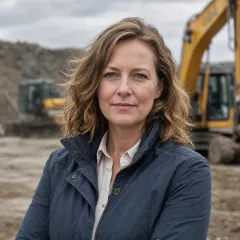
Charlotte Avery is an earth-moving machinery analyst covering excavators, mini excavators, loaders, skid steers, dozers, graders, compactors, and attachments. She uses ISO 6165 machine classification and ISO 20474-1 safety requirements while examining operating mass, rated payload, breakout force, ground pressure, stability, visibility, guarding, and attachment compatibility. Her work helps contractors and fleet buyers match machine size, undercarriage, transport limits, and protective features to terrain, duty cycle, and jobsite access.