
How to Choose a Used Excavator Supplier and Backhoe Wholesale Partner: A TCO Checklist from 14 Mistakes
-
The TCO formula I use before I talk to any supplier
-
Mistake 1: Treating 'Sumitomo' as one catalog
-
Mistake 2: Skipping the inspection reserve on used excavators
-
How to choose with backhoe for wholesale: the attachment checklist
-
Private-label excavators: the costs nobody quotes
-
The reverse validation: why I no longer trust the cheapest quote
-
What I ask every supplier now
-
When this checklist doesn't apply
If you're comparing a used excavator supplier, a private-label excavator program, or a backhoe wholesale package, start with total cost of ownership—not the unit price. The cheapest quote I ever approved cost us $8,700 more than the best quote, because I missed freight, inspection repairs, a non-OEM harness, and 9 days of downtime.
I handle used equipment and attachment orders for a mid-size dealer. I've been doing this for 9 years. I've personally made and documented 14 significant sourcing mistakes, totaling roughly $46,000 in wasted budget. Now I maintain our team's pre-purchase checklist. This is that checklist, plus the mistakes that built it.
The TCO formula I use before I talk to any supplier
Total cost of ownership (i.e., not just the unit price but every cost that hits before and after delivery) is the only comparison that matters. Here's the formula:
TCO = unit price + freight/import/documentation + inspection/repair reserve + parts lead-time risk + downtime + warranty/admin + private-label setup.
I now calculate TCO before comparing any vendor quotes. It takes 20 minutes. It has saved us at least $31,000 since Q1 2024.
What I mean is that a $500 cheaper machine isn't cheaper if it arrives with a leaking cylinder, if the replacement for Sumitomo HC-8 takes 6 weeks, or if your crew loses 3 days waiting for a hose that no local supplier stocks. That's not a discount. That's a delayed cost.
Mistake 1: Treating 'Sumitomo' as one catalog
In my first year (2017), I made the classic mistake of assuming a Sumitomo name meant cross-compatibility. A buyer asked for parts that would fit a Sumitomo machine. I found a listing tied to Sumitomo Electric Wiring Systems and assumed the wiring harness would work. It didn't. The connector layout and model-year changes were different. We ate a $1,900 return and restocking fee.
Here's the thing: Sumitomo Electric Wiring Systems and construction machinery parts are not automatically the same supply chain. If your search includes 'sumitomo electric wiring systems,' confirm the division, the machine model, and the serial number before you pay. Don't assume the name is enough.
For a replacement for Sumitomo HC-8, I now ask for three things: the machine serial number, a photo of the old part, and a written return policy. If the supplier can't provide all three, I don't approve the order. That rule came after a September 2022 order where a 'compatible' hydraulic part failed in the first week. The part was $2,400. The labor and downtime added $4,300.
Mistake 2: Skipping the inspection reserve on used excavators
Used excavator supplier quotes are often built on clean photos and optimistic descriptions. I've learned to add a 15-20% inspection and repair reserve to every used machine. The upside of skipping that reserve was saving $2,000 on a 6-unit order. The risk was missing a customer's start date. I kept asking myself: is $2,000 worth potentially losing a $40,000 account?
In September 2022, I approved a 6-unit used excavator order. The supplier showed clean photos. Two machines arrived with hydraulic pump leakage. One had a non-OEM wiring harness that didn't match the dashboard. We spent $6,800 in parts and labor plus 9 days of delay. The expected value said the deal was fine. The downside felt catastrophic—and it was.
Now I use a simple rule: if the seller won't allow a third-party inspection, the TCO just went up by the full value of the machine. Walk away.
How to choose with backhoe for wholesale: the attachment checklist
This is the short version of how to choose with backhoe for wholesale orders. Don't buy backhoes by brand name alone. Check the hydraulic flow, pin dimensions, quick-coupler standard, bucket size, and hose routing. A backhoe that fits one carrier may not fit the next one in your wholesale batch.
I once ordered 12 backhoe attachments for a wholesale package. The supplier confirmed 'universal fit.' It wasn't. Seven units needed adapter brackets. That error cost $3,200 in brackets and freight plus a 1-week delay. Now our checklist requires a fitment drawing and a test report before we place any backhoe wholesale order.
If you're sourcing for distributors, also ask about packaging, labeling, and spare-parts kits. Those small items drive TCO later. A missing decal is annoying. A missing seal kit is a support problem.
Private-label excavators: the costs nobody quotes
For a pc excavator private label program, the machine is only the first invoice. You'll also pay for branding, manuals, decals, warranty administration, parts catalogs, and after-sales support. I've seen a 'cheap' private-label quote beat the OEM price by 12%—then lose all of that margin in manual translation and warranty claims.
My rule: don't private-label a model unless you can support parts for at least 5 years. If you can't name the supplier for hydraulic pumps, final drives, and controllers, you don't have a private-label program. You have a sticker.
I treat the Sumitomo parts ecosystem as a benchmark for catalog discipline—not as a promise that any third-party supplier can match it. That's a neutral standard: does the supplier have exploded diagrams, serial-number breaks, and a named warranty contact? If not, the TCO is unknown.
The reverse validation: why I no longer trust the cheapest quote
Everyone told me to check hidden fees before approving a vendor. I only believed it after ignoring that step once and eating an $800 mistake. The quote was $18,500. By the time we paid freight, inspection, a missing bucket, and a documentation fee, it was $24,900. The other quote was $21,200 all-inclusive. We thought we saved $2,700. We actually lost $3,700.
That's when I started asking for a landed-cost sheet. Not a verbal estimate. A sheet with every line item. If a supplier won't put freight and fees in writing, I assume the TCO is higher than the quote.
What I ask every supplier now
- What's the all-in landed cost, including freight, import, and documentation?
- Can I see a third-party inspection report or arrange one?
- What's the lead time for the top 5 wear parts?
- Are the parts OEM, aftermarket, or private label—and what's the warranty?
- What's the return or repair process if the machine fails in the first 30 days?
- For backhoe wholesale, can you provide a fitment drawing and coupler spec?
According to the FTC's advertising guidance (ftc.gov), claims must be truthful, not misleading, and substantiated.
So when a used excavator supplier says 'fully inspected' or a parts seller says 'OEM-compatible,' ask for the substantiation. That's not being difficult. That's TCO protection.
When this checklist doesn't apply
This isn't for buying a parts machine or a one-off project where downtime doesn't matter. If you have in-house mechanics and a trusted dealer who stocks your parts, you can reduce the reserve. Also, if your budget can't absorb a 15-20% repair reserve, don't buy used—rent or buy new. I'm not a lawyer, certification body, or customs broker. Verify current regulations and certification requirements with official sources. Pricing references here are based on our quotes as of April 2026; verify current rates before you commit.
After 9 years and 14 documented mistakes, I've come to believe the best supplier isn't the one with the lowest unit price. It's the one that makes your total cost visible before you sign.
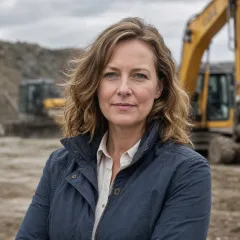
Charlotte Avery is an earth-moving machinery analyst covering excavators, mini excavators, loaders, skid steers, dozers, graders, compactors, and attachments. She uses ISO 6165 machine classification and ISO 20474-1 safety requirements while examining operating mass, rated payload, breakout force, ground pressure, stability, visibility, guarding, and attachment compatibility. Her work helps contractors and fleet buyers match machine size, undercarriage, transport limits, and protective features to terrain, duty cycle, and jobsite access.